


The rise of virtual personalities is changing online marketing, but What Are AI Influencers and How Do They Work? Get the complete answer here

Imagine scrolling through Instagram or TikTok and discovering a creator with millions of followers, stunning content, and a perfectly curated lifestyle. You admire their posts, engage with their recommendations, and perhaps even purchase products they endorse. Then you learn something surprising: the influencer isn’t a real person at all.
Welcome to the world of AI Influencers.
Over the last few years, Virtual Influencers have evolved from a futuristic concept into a powerful force in Social Media Marketing and Influencer Marketing. These digital personalities are attracting massive audiences, securing lucrative Brand Partnerships, and reshaping how companies approach Brand Promotion and customer engagement.
As artificial intelligence continues to advance, businesses are exploring new ways to connect with consumers through highly customizable Digital Personas powered by Generative AI and sophisticated design technologies. From fashion campaigns to Ecommerce Marketing, AI-driven personalities are proving that influence is no longer limited to humans.
But what exactly are AI influencers? How do they work behind the scenes? And why are brands investing heavily in these digital stars?
Let’s explore the technology, strategy, benefits, and challenges behind one of the most fascinating developments in modern marketing.
Understanding AI Influencers
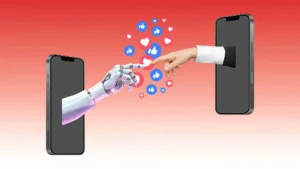
At their core, AI Influencers are digital personalities created using artificial intelligence, computer graphics, and storytelling techniques. Unlike traditional influencers, they do not exist in the physical world. Instead, they are carefully designed Computer-Generated Characters that interact with audiences through social media platforms.
These influencers often appear as highly realistic Digital Humans or stylized avatars. Some are designed to resemble everyday people, while others take on more futuristic appearances. Their creators build detailed Character Backstory elements, including personalities, interests, hobbies, and life experiences, making them feel authentic and relatable.
Many AI influencers are powered by advanced AI Avatars and enhanced through CGI (Computer-Generated Imagery), allowing them to appear in photos, videos, advertisements, and interactive content. Modern systems use 3D Modeling to create realistic facial expressions, body movements, and environments.
Some platforms even incorporate Motion Capture Technology, enabling digital characters to mimic natural human gestures and emotions. This creates a more engaging and believable experience for followers.
The result is a new generation of Virtual Creators that can consistently produce content, engage audiences, and represent brands without the limitations faced by human influencers.
The Technology Behind AI Influencers

The rise of AI influencers wouldn’t be possible without rapid advancements in artificial intelligence and digital content creation technologies.
Generative AI and Content Creation
One of the most important technologies behind AI influencers is Generative AI. These systems can assist with image generation, video creation, script writing, and Content Generation at scale.
Through AI-Generated Content, creators can produce social media posts, captions, marketing materials, and promotional campaigns much faster than traditional methods. This allows brands to maintain a consistent Social Media Presence while reducing production costs.
AI also supports Personalized Content creation. By analyzing user behavior and preferences, AI influencers can deliver messages tailored to specific audience segments, improving engagement and relevance.
Conversational AI and Interactive Experiences
Many AI influencers now leverage Conversational AI to communicate directly with followers. Through chatbots and virtual assistants, these digital personalities can answer questions, recommend products, and engage in meaningful discussions.
These AI-Powered Interactions create the impression of a genuine relationship between the influencer and their audience. For brands, this opens opportunities to provide customer support, collect feedback, and nurture stronger customer relationships.
Hyper-Realistic Design
Today’s most successful AI influencers rely heavily on Hyper-Realistic Avatars and advanced rendering systems. Artists combine CGI (Computer-Generated Imagery), 3D Modeling, and animation techniques to create lifelike appearances.
As technology improves, the line between real and digital personalities becomes increasingly difficult to distinguish. This realism contributes significantly to audience fascination and engagement.
Synthetic Media and Automation
Another critical component is Synthetic Media, which refers to digitally generated content created using AI technologies. Through synthetic media, AI influencers can appear in virtually any environment without requiring expensive photoshoots or travel.
Combined with Content Automation, brands can produce large volumes of content across multiple channels while maintaining consistency and quality.
How AI Influencers Work in Marketing
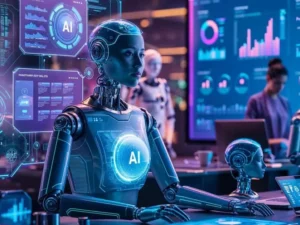
The true value of AI influencers lies in their ability to support marketing objectives.
Brands increasingly view AI influencers as scalable assets that can operate around the clock without many of the challenges associated with traditional influencers.
Brand Partnerships and Promotion
One of the primary functions of AI influencers is facilitating Brand Partnerships. Companies collaborate with virtual personalities to promote products, services, and experiences through sponsored campaigns.
Unlike human influencers, AI influencers provide exceptional Creative Control. Brands can carefully shape every aspect of the influencer’s appearance, messaging, and behavior.
This level of control helps maintain Brand Safety, ensuring that campaigns align with corporate values and avoid unexpected controversies.
Virtual Brand Ambassadors
Many organizations now use AI influencers as Virtual Brand Ambassadors. These digital representatives embody a brand’s identity while delivering consistent messaging across channels.
Whether promoting fashion products, technology solutions, or lifestyle brands, virtual ambassadors help strengthen AI-Driven Branding strategies.
Social Commerce and Product Endorsements
The growth of Social Commerce has further increased the value of AI influencers. Consumers increasingly discover and purchase products directly through social media platforms.
AI influencers can facilitate Virtual Product Endorsements, showcasing products through engaging videos, tutorials, and reviews. Their ability to create seamless shopping experiences makes them valuable assets for modern Ecommerce Marketing strategies.
Sponsored Content Campaigns
Brands frequently collaborate with AI influencers on Sponsored Content initiatives. These campaigns can include product launches, awareness campaigns, educational content, and seasonal promotions.
Since AI influencers can generate content rapidly, marketers can respond quickly to trends and consumer interests without lengthy production timelines.
Why Brands Are Investing in AI Influencers
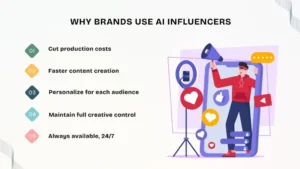
The growing popularity of AI influencers isn’t just a passing trend. Businesses are recognizing several practical advantages.
Scalability of Content Creation
One major advantage is the Scalability of Content Creation. Human influencers have physical limitations, scheduling conflicts, and availability constraints.
AI influencers, on the other hand, can produce content continuously. Through automation and AI-assisted workflows, brands can maintain an active presence across multiple platforms simultaneously.
Better Audience Targeting
Modern AI systems support advanced Audience Targeting capabilities. By analyzing user data and engagement patterns, brands can tailor campaigns to specific demographics and interests.
This allows marketers to create highly relevant experiences for different customer segments.
Reaching Younger Audiences
AI influencers resonate particularly well with younger generations, including the Gen Z Audience and Gen Alpha Audience.
These digital-native consumers are comfortable interacting with technology-driven experiences and often embrace innovative forms of entertainment and communication.
For brands targeting younger demographics, AI influencers offer a unique way to capture attention and build relevance.
Enhanced Influencer ROI
Businesses are also attracted by the potential for improved Influencer ROI. Since AI influencers can generate large volumes of content and maintain consistent messaging, brands may achieve greater efficiency compared to traditional campaigns.
Furthermore, digital influencers eliminate many logistical expenses associated with travel, scheduling, and production.
Cross-Platform Marketing Opportunities
AI influencers excel at Cross-Platform Marketing. A single digital personality can simultaneously appear on Instagram, TikTok, YouTube, websites, mobile apps, and virtual environments.
This unified presence helps strengthen brand recognition and improve campaign consistency.
The Human Side of AI Influencers

Despite their technological foundations, successful AI influencers thrive because they connect with people emotionally.
Digital Storytelling and Character Development
Strong Digital Storytelling plays a crucial role in audience engagement. The most popular AI influencers have compelling narratives that make them feel real and relatable.
Their creators carefully craft a unique Character Backstory, complete with goals, values, and personal experiences. This storytelling approach encourages followers to become emotionally invested in the character’s journey.
Building Consumer Trust
One of the biggest challenges facing AI influencers is Consumer Trust.
People naturally connect with authentic human experiences. When audiences discover that an influencer is artificial, questions often arise regarding transparency and honesty.
Brands must prioritize Authenticity in Marketing by clearly communicating the nature of virtual influencers while ensuring their messaging remains credible and valuable.
Reputation Management
Like human influencers, AI influencers require effective Reputation Management.
A poorly executed campaign, controversial message, or misleading endorsement can damage audience relationships. Brands must carefully monitor interactions and maintain ethical standards.
Online Community Building
Successful AI influencers excel at Online Community Building.
By engaging followers through comments, conversations, live experiences, and interactive content, they create a sense of belonging and participation.
These communities often become powerful drivers of brand loyalty and long-term engagement.
The Future of AI Influencers

As technology continues evolving, AI influencers are becoming increasingly sophisticated.
Future developments may include autonomous AI Agent Influencers capable of making independent decisions, creating original content, and managing audience relationships with minimal human intervention.
We are also likely to see deeper Human-AI Collaboration, where human creators work alongside artificial intelligence to develop innovative campaigns and experiences.
Advancements in Visual Identity systems will enable even more realistic and customizable digital personalities. The distinction between a Virtual Celebrity and a human celebrity may become increasingly blurred.
At the same time, marketers must address ethical considerations surrounding transparency, privacy, and responsible AI use. Maintaining trust will be essential for long-term success.
Ultimately, AI influencers represent a significant shift in how brands communicate, engage audiences, and create value in digital environments.
Conclusion
AI influencers are transforming the marketing landscape by combining artificial intelligence, creativity, and digital storytelling into a powerful new form of influence. Through technologies such as Generative AI, CGI (Computer-Generated Imagery), 3D Modeling, Motion Capture Technology, and Conversational AI, brands can create compelling Digital Personas that engage audiences in ways previously unimaginable.
From improving Audience Engagement and supporting Brand Partnerships to driving Social Commerce and expanding Cross-Platform Marketing efforts, AI influencers offer businesses new opportunities for growth and innovation.
However, success requires more than advanced technology. Brands must prioritize Authenticity in Marketing, strengthen Consumer Trust, maintain Brand Safety, and embrace responsible Human-AI Collaboration.
As virtual personalities continue to evolve, one thing is clear: AI influencers are no longer a futuristic concept. They are actively shaping the future of digital communication, marketing, and customer engagement.
Whether you’re a marketer, entrepreneur, content creator, or business owner, now is the perfect time to explore how AI influencers could fit into your strategy and prepare for the next era of digital influence.
FAQs:
What is an AI influencer?
An AI influencer is a digital personality created using artificial intelligence, computer graphics, and content creation technologies. Unlike traditional influencers, AI influencers are not real people. They exist as virtual characters that share content, engage with audiences, promote brands, and build communities across social media platforms such as Instagram, TikTok, and YouTube.
How do AI influencers make money?
AI influencers generate revenue through several monetization methods, including:
- Sponsored posts and brand collaborations
- Affiliate marketing commissions
- Product endorsements
- Social commerce campaigns
- Brand ambassador partnerships
- Licensing agreements
- Digital products and merchandise
- Subscription-based content
- Virtual appearances and events
Many brands work with AI influencers because they offer consistent branding and scalable content creation.
Are AI influencers real people?
No, AI influencers are not real people. They are virtual characters created using technologies such as artificial intelligence, CGI, 3D modeling, and animation. While some AI influencers may look incredibly realistic, their appearance, personality, and content are generated and managed by creators, designers, and marketing teams.
Who is the most famous AI influencer?
One of the most famous AI influencers is Lil Miquela, a virtual influencer with millions of followers on Instagram. She has collaborated with major fashion and lifestyle brands and is often credited with popularizing AI influencers worldwide. Other well-known virtual influencers include Shudu, Imma, Noonoouri, and Aitana Lopez.
Can AI influencers replace human influencers?
AI influencers are unlikely to completely replace human influencers. While they offer benefits such as scalability, creative control, and consistent content production, human influencers provide real-life experiences, emotions, and authenticity that many audiences value. The future will likely involve a combination of both human and AI influencers working alongside each other.
How are AI influencers created?
Creating an AI influencer typically involves several steps:
- Developing a character concept and personality.
- Designing a digital appearance using AI and graphic design tools.
- Building a detailed backstory and brand identity.
- Creating images, videos, and content using AI technologies.
- Setting up social media profiles and content strategies.
- Managing audience interactions and marketing campaigns.
Many successful AI influencers are created and maintained by teams of designers, marketers, AI specialists, and content creators.
What tools are used to create AI influencers?
Common tools used to create AI influencers include:
- ChatGPT for content and personality development
- Midjourney for AI-generated images
- DALL-E for visual content creation
- Stable Diffusion for image generation
- Blender for 3D modeling
- Unreal Engine for realistic rendering
- Runway for AI video generation
- Adobe Creative Cloud for design and editing
- ElevenLabs for AI voice generation
- Character Creator for avatar design
These tools help create realistic visuals, engaging content, and interactive experiences.
Why do brands use AI influencers?
Brands use AI influencers because they offer several advantages:
- Greater control over messaging and branding
- Consistent content creation
- Lower long-term production costs
- No scheduling or availability issues
- Improved brand safety
- Ability to reach global audiences
- Enhanced personalization opportunities
- Scalable marketing campaigns
AI influencers can help brands maintain a strong social media presence while reducing many challenges associated with traditional influencer partnerships.
Are AI influencers ethical?
The ethics of AI influencers remain a topic of debate. Supporters argue that AI influencers provide creative marketing opportunities and innovative customer experiences. Critics raise concerns about transparency, unrealistic beauty standards, misinformation, and audience manipulation.
To operate ethically, brands should clearly disclose when content is AI-generated and ensure responsible marketing practices that prioritize consumer trust and authenticity.
What is the difference between AI influencers and virtual influencers?
Although the terms are often used interchangeably, there is a difference:
- Virtual influencers are digital characters that may be fully controlled by human creators.
- AI influencers use artificial intelligence to assist with content creation, audience interactions, personalization, or automation.
In short, all AI influencers are virtual influencers, but not all virtual influencers use AI technologies.
Do AI influencers interact with followers?
Yes, many AI influencers interact with followers through comments, direct messages, chatbots, and AI-powered conversation systems. Some use conversational AI to answer questions, recommend products, and engage audiences in real time. However, the level of interaction varies depending on the technology and team managing the influencer.
How much does it cost to create an AI influencer?
The cost of creating an AI influencer varies significantly based on complexity and quality:
- Basic AI influencer: $500–$5,000
- Mid-level professional influencer: $5,000–$50,000
- High-end virtual influencer with advanced CGI and animation: $50,000–$500,000+
Costs typically include character design, AI tools, content production, animation, social media management, and ongoing maintenance. Brands investing in large-scale campaigns often allocate substantial budgets to create highly realistic and engaging virtual personalities.
